Barcelona Travel Notes
Barcelona is one of the cultural highlights of Europe. Situated on the Mediterranean coast of the Iberian Peninsula, the Catalan capital is famous for its distinctive architecture and its world-renowned food and wine.
Travellers should familiarise themselves with our Peace of mind travel policy for Covid-19 as well as the terms and conditions applicable at the time of booking.
Enjoy this short tour of Spain designed for mature travellers. This unique travel experience gives you the opportunity to discover Iberia in an escorted small group program. Experience a country with a rich history, diverse culture and delicious food. Once a formidable and mighty empire, Spain had access to great wealth and used this to create many of the monuments, structures and heritage sites we admire today.
The Iberian Peninsula in particular is renowned for its red wine, exotic cuisine and bustling street life. Starting in the vibrant beach-side city of Barcelona, we will travel through northern Spain into Rioja and Basque country before visiting the industrial city of Bilbao. After Bilbao we head back down to Spain's incredible capital Madrid, where we get a chance to see how Spain has contributed to the world of art.
The small group short tour to Spain is fully escorted and makes great use of local guides whose knowledge enhances the program. Some highlights you can expect from this vacation include a visit to La Rioja, an autonomous community in the north of Spain famed for its red wine and vast blue skies, the incredible Guggenheim Museum in Bilbao, and the Royal Palace in Madrid. This will offer you everything you could want in a small group holiday, from the chance to sip red wine against a rugged, mountainous backdrop, to eating tapas in the bars of Barcelona, to exploring some of Madrid's amazing churches and learning of its complex religious history.
We will spend nights in the following cities:
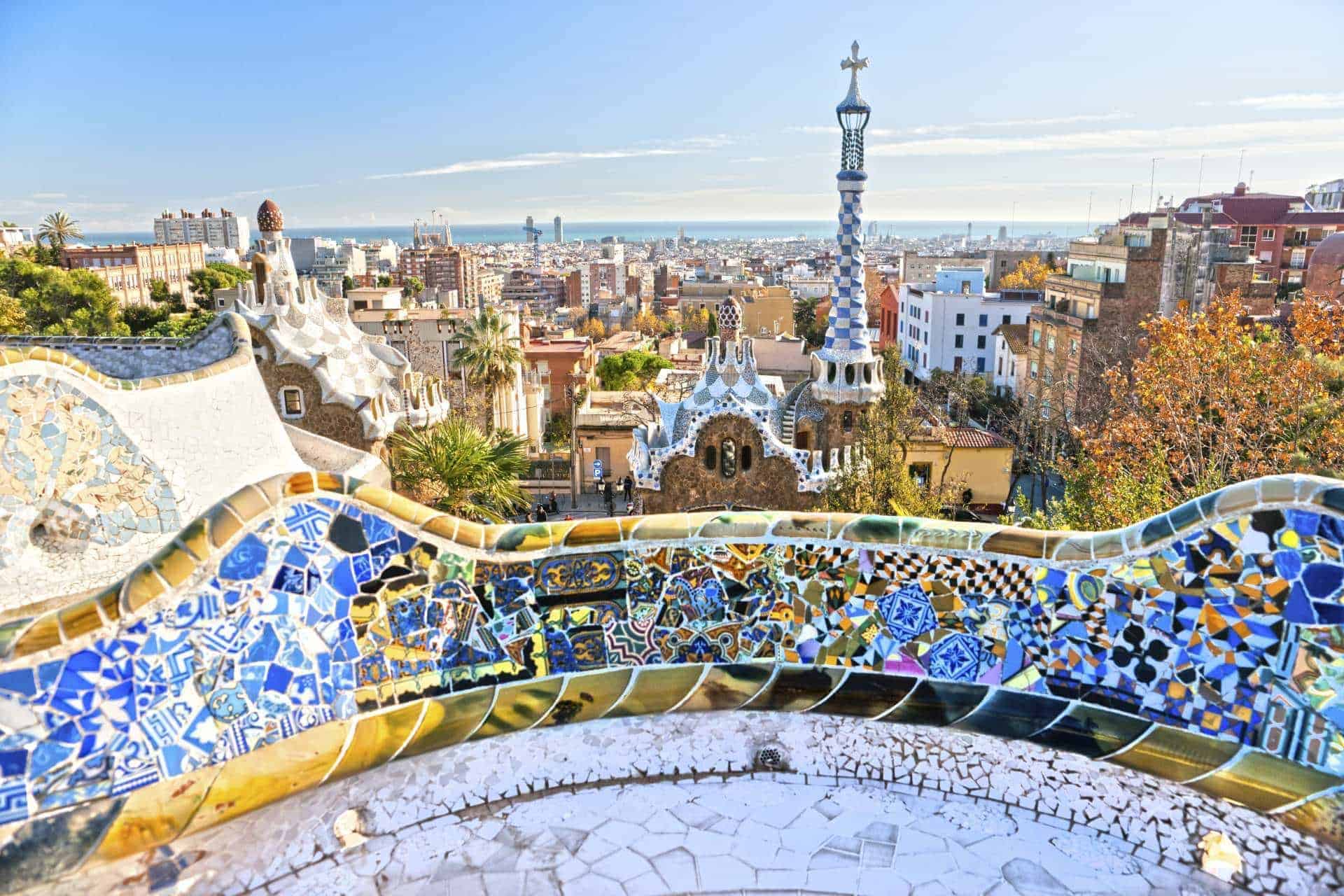
The entrancing cosmopolitan city of Barcelona is one of the cultural highlights of Europe. Situated on the Mediterranean coast of the Iberian Peninsula, the Catalan capital is famous for its distinctive architecture and its world-renowned food and wine. It was believed to have been founded by either the Phoenicians or Carthaginians. Under the Romans, it was known as “Colonia Faventia Julia Augusta Pia Barcino” or Barcino, which gained importance around the 3rd century AD. Towards the end of the 1800s, an avant-garde style of music, literature, art and architecture evolved in Barcelona, which led to a regional artistic and linguistic renaissance. This cultural re-birth went on to become a means of expression for Catalan nationalism. The major exponent of this ‘modernism’ in architecture was Antoni Gaudí, whose buildings and monuments have left an indelible mark on the city.
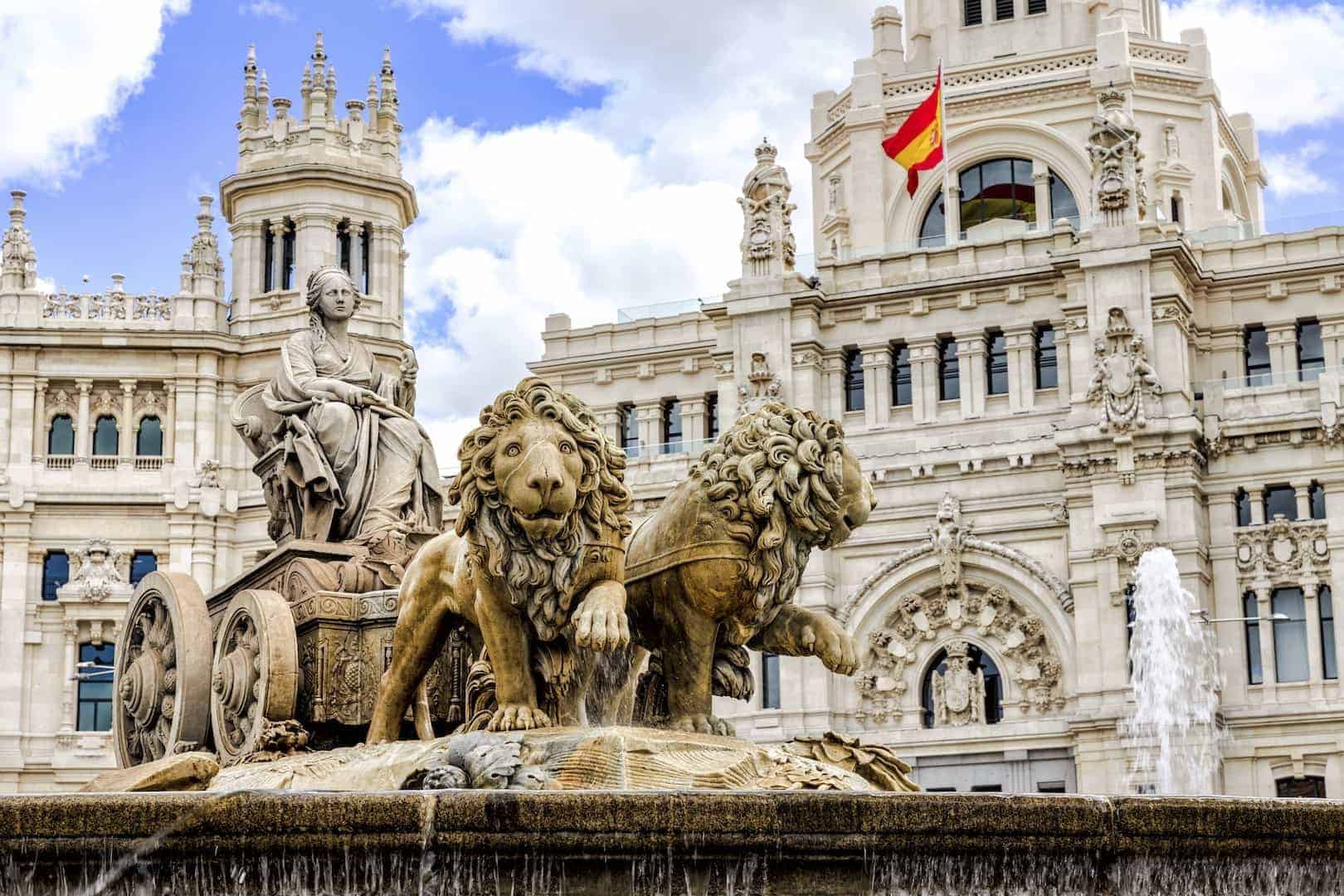
Madrid, the capital of Spain, is situated in the geographical centre of the peninsula, on the Meseta Castellana, the Castilian Plateau, around 700 metres above sea level. With its more than three million inhabitants and another two million in its surrounding Comunidad de Madrid, it is indeed one of the liveliest and most exciting cities in Europe. Madrid has been inhabited since the Stone Age, but it developed as a medina (Arab town) in the 9th century, growing around the alcazar or castle overlooking the Manzanares River. It was eventually captured from the Muslims by Alfonso VI of Castile and Leon in 1083. Many kings spent time in this city, and in 1309, the Cortes, precursor to the Spanish Parliament, was first called in Madrid.
The last king of Spain to live in Madrid's Royal Palace was Alfonso XIII, who abdicated the throne in 1931 following a municipal plebiscite that abolished the monarchy. The Spanish Constitution of 1931, calling for the democratic election of Spain’s rulers, was legislated in Madrid. The Spanish Civil War broke out in 1936, and Madrid, a bastion of the Republican forces, was besieged and bombed by Franco’s Nationalist forces. The Nationalist forces were supported by Fascist Italy and Nazi Germany, and Madrid eventually fell in March 1939.
Following Franco’s death and the end of his dictatorship in 1975, Madrid was confirmed as Spanish capital in the 1978 constitution. The 1978 constitution also established the Spanish government as a parliamentary monarchy, with the monarch as head of state and the prime minister as head of government.
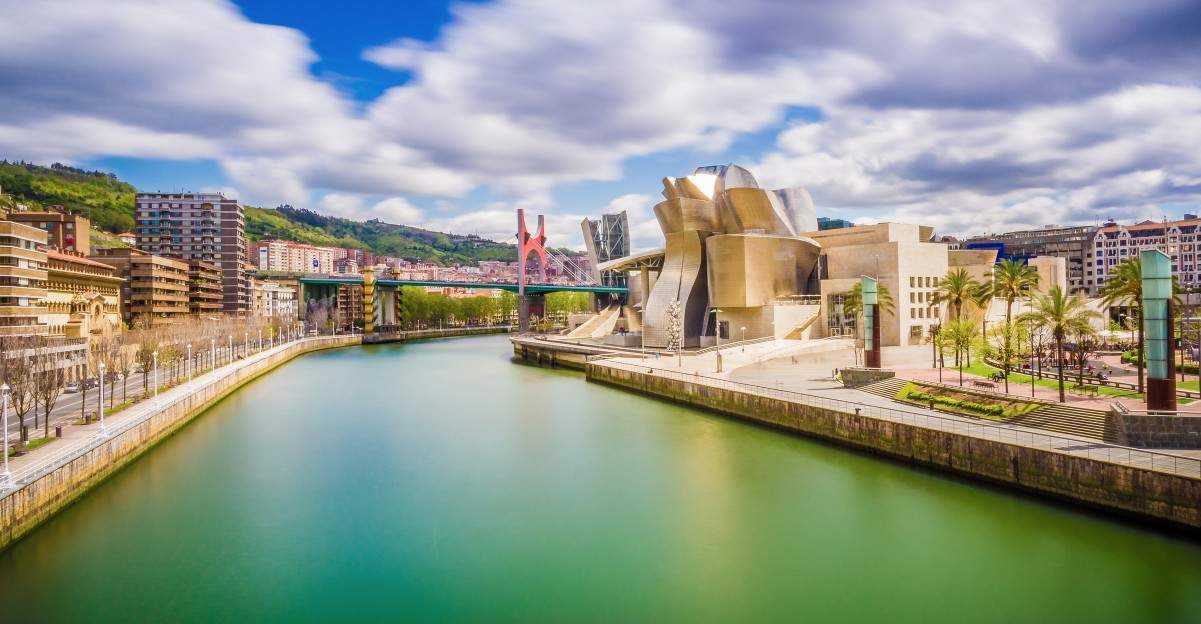
In the heart of Basque Country, 11 km from the Bay of Biscay, you will find Bilbao, one of northern Spain’s greatest treasures. Renowned for its famous Guggenheim Museum, Bilbao’s architectural wonders are surrounded by a ring of rolling green hills and lies on the mouth of the Nervion River. Once an industrial city, it has been transformed into a design city, where sleek new buildings sit alongside Gothic cathedrals and art nouveau train stations. At the end of 2017, Bilbao was chosen the Best European City 2018 at The Urbanism Awards 2018 and it is not hard to see why, with a new rapid transit system, a tram line and the Azkuna Zentroa, a wine storage warehouse turned cultural centre. This Spanish city has it all: vibrant history and culture, modern architecture, beautiful scenery and spectacular regional cuisine.
Calahorra is a town in the La Rioja region of northern Spain that has been inhabited since the Paleolithic. As the Roman town Calagurris (later Calagurris Nassica), it became an important administrative centre for surrounding regions. The town famously resisted the general Pompey—who was part of Caesar’s First Triumvirate and married to Caesar’s daughter, Julia—supporting instead his rival Quintus Sertorius, leader of the revolt against Rome. Calahorra supported Sertorius for four years until it suffered from starvation and fell to Pompey’s legate. This small town has historic landmarks dating from this era, such as ruins of a Roman aqueduct, as well as a 5th-century Gothic Cathedral, and the Casa Santa, said to house the bodies of the town’s patron saints (Emeterius and Celedonius), making it a pilgrimage site every August.
The medieval town of Burgos served as an important commercial centre and capital of the unified kingdoms of Castile and Leon for five centuries. The city’s significance in the Middle Ages can be seen in its lush architecture and notable pieces of art. The Burgos Cathedral, constructed from 1221 to 1567, is hailed as a comprehensive example of the evolution of Gothic architecture, leading to its being listed by UNESCO as a World Heritage Site. Another important Gothic landmark is the 15th century Cartuja de Milaflores (Milaflores Charterhouse), once the recreational residence of Henry III of Spain, restored by his son John II with the help of Spain’s top architects, sculptures, and painters.
This Spain Short Tour is limited to 14 travellers. This tour is featured in our brochure as "Discovering Iberia - Short Tour". Odyssey offers a long version of the program that includes Portugal and southern Spain as well.
You can learn more about Spain and see all other tour departures on our country profile. For more details on this tour, click the ‘Top 5’ or ‘Itinerary’ buttons above! If you’re keen to experience this tour, please call or send an email. Or, to book, simply fill in the form on the right hand side of this page.
The following list of articles are either published by Odyssey Traveller for mature aged and senior travellers or carefully selected from external sources to maximise their knowledge and enjoyment of Spain when visiting:
Barcelona is one of the cultural highlights of Europe. Situated on the Mediterranean coast of the Iberian Peninsula, the Catalan capital is famous for its distinctive architecture and its world-renowned food and wine.

Learn about Madrid and its history on a small group package tour for mature and senior travellers for couples and single travellers. Odyssey offers a range of tours that take the traveller to Madrid in its collection of Spain tours.

15 of the Best Places to Visit in Spain Spain is one of Europe’s most popular holiday destinations, attracting 82.8 million international visitors in 2018. We have collected the 15 best places to visit in…

Escorted small group tours for mature and senior travellers to Spain. Designed for couples and solo travellers who like to explore and enjoy learning as they travel to Madrid, Barcelona, Seville, Bilboa, Burgos, Figueres, Zaragoza and so much more.

Books to read if you are taking a trip to Spain Odyssey Traveller has prepared and made this reading list of books to read if you are taking a trip to Spain. Odyssey Traveller offers…

Are these the Best Art Galleries in Western Europe? It’s no secret that Western Europe is home to some of most spectacular art galleries in the world. These grand neoclassical buildings are hard to miss,…

n the heart of Basque Country, 11km from the Bay of Biscay, you will find Bilbao, one of northern Spain’s greatest treasures. Renowned for its famous Guggenheim Museum, Bilbao’s architectural wonders are surrounded by a…

Burgos, Spain Burgos in northern Spain is the country’s original heartland, initially known as Castilla la Vieja – the old part of the kingdom of Castile. The city of Burgos, founded in 884, was the…

The Camino de Santiago, also known as the Way of St James, is an ancient Catholic pilgrimage route that runs across northern Spain to the shrine of the Apostle St James in Santiago de Compostela…

As a sea connecting continents and stretching from the Atlantic Ocean in the west to Asia in the east, the Mediterranean has for centuries been a centre of trade and exploration.

On Catalonia’s Costa Brava, 45 minutes from Girona, lies the small town of Figueres, the birthplace of surrealist artist Salvador Dali and home to the Teatre-Museu Gala Salvador Dali. Apart from the Dali museum, Figueres…
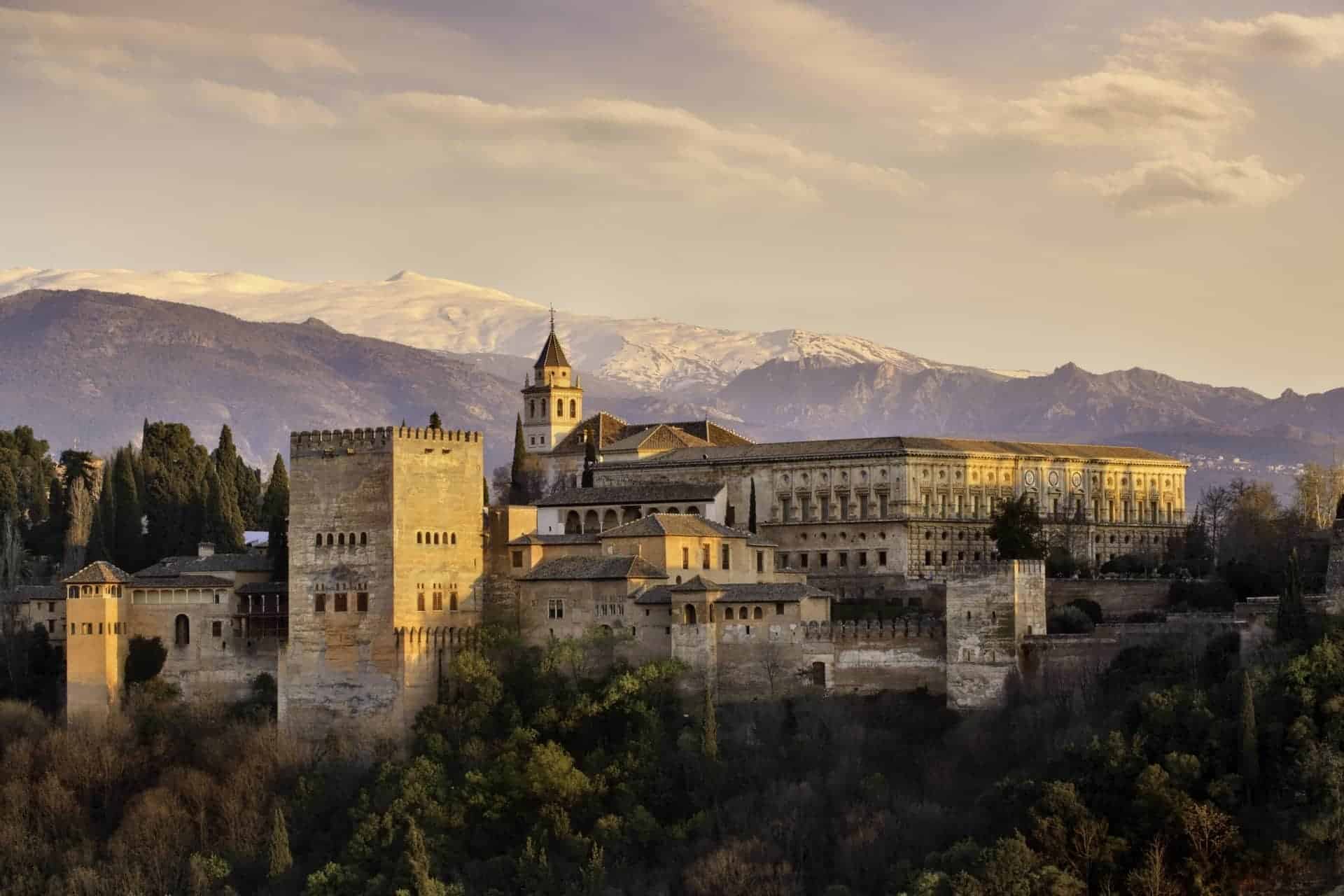
Located at the foot of the Sierra Nevada mountains in Spain’s southernmost region of Andalucia, Granada was the last stronghold of the Spanish Moors and the brilliance of Moorish spirit and culture endures in the city…

Seville is a lively and disarming city, and a popular tourist destination in Spain.

An hour outside of Barcelona is the impressive multi-peaked mountain range known as Montserrat. Within its dramatic, rocky mountain tops hides the Benedictine Monestir de Montserrat, a monastery popular with visitors from all over the…

Pamplona, Spain Pamplona, the capital of Navarre in northern Spain, is famous worldwide for the running of the bulls during the San Fermin fiesta, and for being one of Ernest Hemingway’s favourite cities. Hemingway visited…

Pilgrimage routes and walking tours Several pilgrimage tracks remain intact and active centuries after they were first established. Many Odyssey tours trace their routes, walking in the footsteps of people […]

A charming seaside town just 35 km from Barcelona, Sitges, with its pristine beaches, array of art galleries and vibrant bars and clubs, Sitges has something for everyone. Sometimes referred to as the St. Tropez…

Just over an hour by train from Barcelona is the magnificent port city of Tarragona. Located on the Costa Daurada, Tarragona is home to sparkling beaches and a wealth of Roman ruins. Once a major…

La Sagrada Familia The Sagrada Familia, still under construction A small group guided tour of La Sagrada Familia, perhaps one of the world’s most iconic buildings, including the Basilicai Temple Expiatori de la Sagrada Familia…

An hour south of Madrid, sitting atop a gorge overlooking the Tagus River, is the magnificent city of Toledo. Often called 'Imperial City' because it was the main venue of the court of Charles V,…

The city of Zaragoza, the fifth-biggest city in Spain, lies in the region of Aragon in northern Spain and is easy to reach from both Madrid and Barcelona. Home to beautiful Moorish architecture, Roman ruins,…




For centuries Malta, Sicily, Sardinia and Corsica held the key to the Mediterranean. We explore ’s the Mediterranean natural beauty, its ancient Roman, and Imperial heritage, its World Heritage Sites, and world famous cities, all with some truly spectacular scenery along the way. This and more is all waiting to be explored on one of Odyssey’s small group tours of the Islands of Mediterranean, designed for the senior traveller, and led by experienced, and enthusiastic like-minded people. This escorted tour of western Mediterranean explores the geography, history, culture and peoples of these 4 islands.
This small group escorted tour explores the magnificent landscapes of Carpathian mountains in Romania, and takes in the vibrant culture and rich heritage of Romanian village life. Travel with like minded people, mature couples or solo travellers.
Taken as a whole, Italian Civilization (which includes, of course, the splendid inheritance of Ancient Rome) is absolutely foundational to Western culture. Music, Painting, Sculpture, Architecture, Literature, Philosophy, Law and Politics all derive from Italy or were adapted and transformed through the medium of Italy.